

Leadership at the Decision Table: Women Leaders Examine the Future of Diplomacy
by Victor Gotevbe, Publisher/ Editor-in-Chief Member at The National Press Club Member and The Society of Professional Journalists (SPJ)
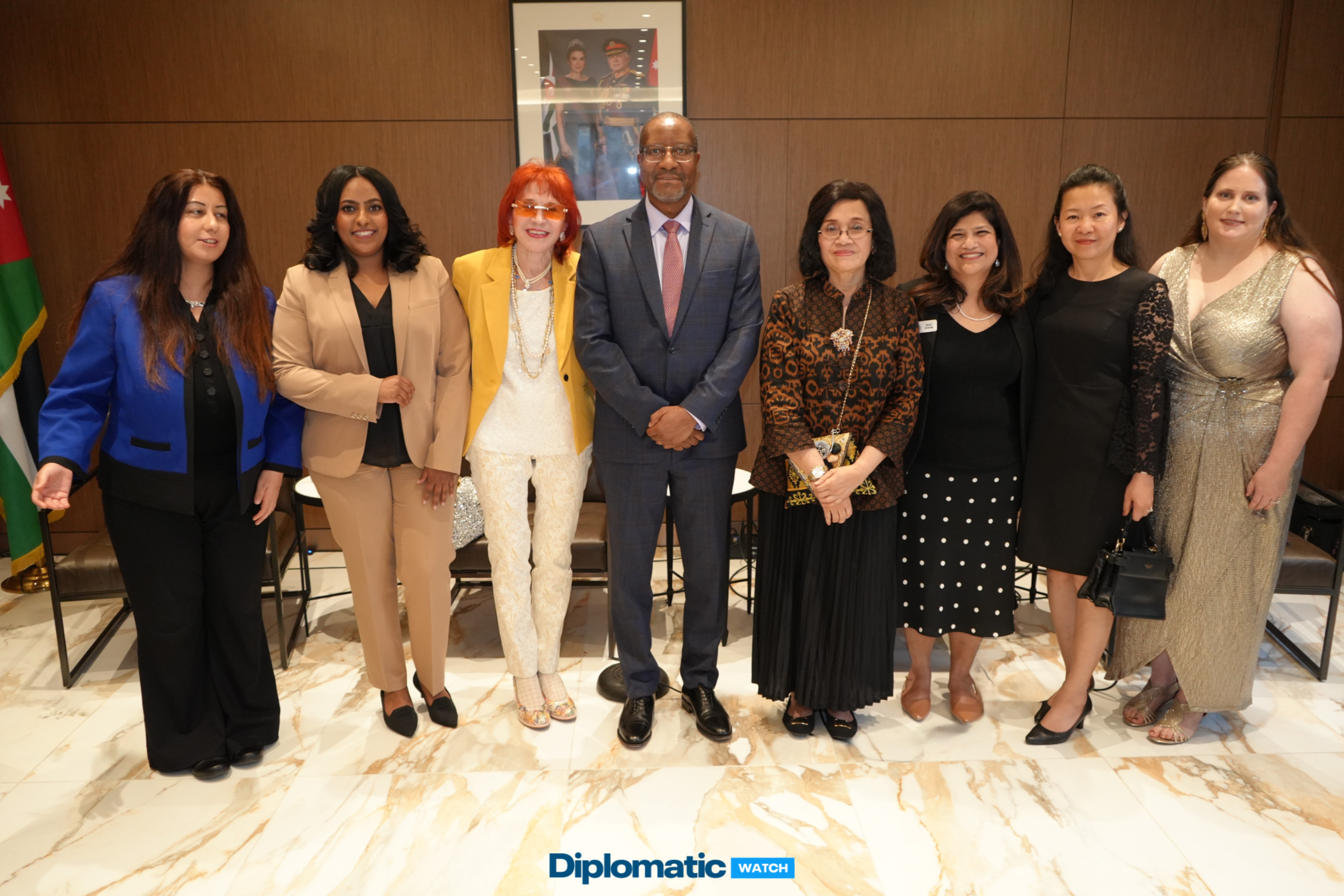
WASHINGTON, D.C. June 25, 2026 — Diplomacy today requires far more than negotiating treaties or managing relations between governments. It demands leaders who can build trust across cultures, strengthen institutions, expand economic opportunity, respond to humanitarian crises, and prepare future generations for an increasingly interconnected world. Those ideas anchored the principal discussion of the Second Annual Women in Diplomacy Forum, where diplomats, policy specialists, educators, humanitarian advocates, and members of Washington’s international community gathered at the Embassy of the Hashemite Kingdom of Jordan. Organized by Diplomatic Watch Magazine in partnership with the Embassy of the Hashemite Kingdom of Jordan in recognition of the United Nations International Day of Women in Diplomacy, the forum brought together Shaz Akram, Dr. Nining Sri Astuti, Dr. Judy Kuriansky, and Sabrina Abdu for a conversation that examined leadership through the lenses of public policy, education, humanitarian service, and international cooperation.
Centered on the theme, “Leadership at the Decision Table,” the dialogue challenged participants to look beyond titles and diplomatic protocol toward the qualities that allow leaders to influence decisions, build consensus, and create lasting partnerships. Structured around three main components—decision-making under pressure, negotiation and economic diplomacy, and preparing future leaders—the session explored how women are helping shape international affairs across government, academia, international organizations, and civil society.
Moderating the discussion was Shaz Akram, whose career has consistently linked diplomacy, education, and leadership development. As Founder and President of HerPivot, she leads a storytelling and mentorship platform dedicated to supporting mid-career and executive-level women as they navigate professional growth. Her previous executive roles with the Women’s Foreign Policy Group, the Fulbright Association, and Mississippi State University’s International Services Office and Holmes Cultural Diversity Center placed her at the intersection of international exchange and higher education. There, she worked closely with diplomats, policymakers, educators, and nonprofit executives to expand networks and strengthen institutional partnerships.
Born in Nigeria and of Pakistani heritage, Akram began her public service career in Pakistan’s Civil Superior Services before relocating to the United States. Today she serves as a Governor of DACOR, Inc., Trustee of the DACOR Bacon House Foundation, and Board Member of the Public Diplomacy Council of America. Those diverse experiences enabled her to anchor the discussion with an appreciation for both the formal institutions of statecraft and the wider network of organizations that increasingly influence global relations.
Opening the forum’s central conversation, Akram observed that diplomacy has evolved into a collaborative enterprise involving governments, universities, international organizations, businesses, and community leaders. Many of today’s most pressing challenges, she noted, cannot be addressed by states acting independently. Progress depends upon partnerships that combine different forms of expertise while encouraging dialogue across national, institutional, and cultural boundaries.
She invited each panelist to begin with a personal reflection on leadership before the program shifted into its first theme, decision-making under pressure.
Despite representing different professions, the speakers shared a common view that authority is earned through judgment, integrity, preparation, and service. Positions of power may open doors, they suggested, but confidence is built through consistent action and a willingness to accept responsibility when choices carry significant consequences.
That foundation set the stage for the opening exchange, which explored what distinguishes leaders who simply occupy positions of authority from those who genuinely shape outcomes.
Dr. Nining Sri Astuti approached the question through a career devoted to higher education, public policy, entrepreneurship, and economic development. As President of the Association of Southeast Asian Nations (ASEAN) Spouses’ Circle in Washington, D.C., she promotes educational cooperation, cultural exchange, and stronger people-to-people connections among the member states of the ASEAN: Brunei Darussalam, Cambodia, Indonesia, Laos, Malaysia, Myanmar, the Philippines, Singapore, Thailand, Timor-Leste, and Vietnam. Alongside her role supporting Indonesia’s diplomatic engagement in the United States, she has remained deeply involved in academic and policy work that strengthens economic opportunity and community development.
Her professional accomplishments began long before arriving in Washington. Trained first as an architect at the Bandung Institute of Technology, she later earned a Master of Arts in Geography from the University of Iowa before completing a doctorate in Monetary Economics at the University of Indonesia. That multidisciplinary background shaped a path that moved from research and teaching into entrepreneurship, financial inclusion, and national economic policy.
As a faculty member at the University of Indonesia, Dr. Nining helped establish the University’s Small and Medium Enterprise Unit, recognizing that entrepreneurs and small businesses play a critical role in economic growth. She later served as Commissioner of Bahana Pembinaan Usaha Indonesia and Chief Executive Officer of the Indonesia Center for Public Policy Studies. Her expertise also supported international development through consulting assignments with the United Nations’ International Fund for Agricultural Development, where she contributed to initiatives promoting rural enterprise and inclusive economic growth. More recently, she assisted Indonesia’s Ministry of Finance in advancing the country’s Ultra Micro financing program, helping extend financial services to entrepreneurs traditionally excluded from formal banking systems.
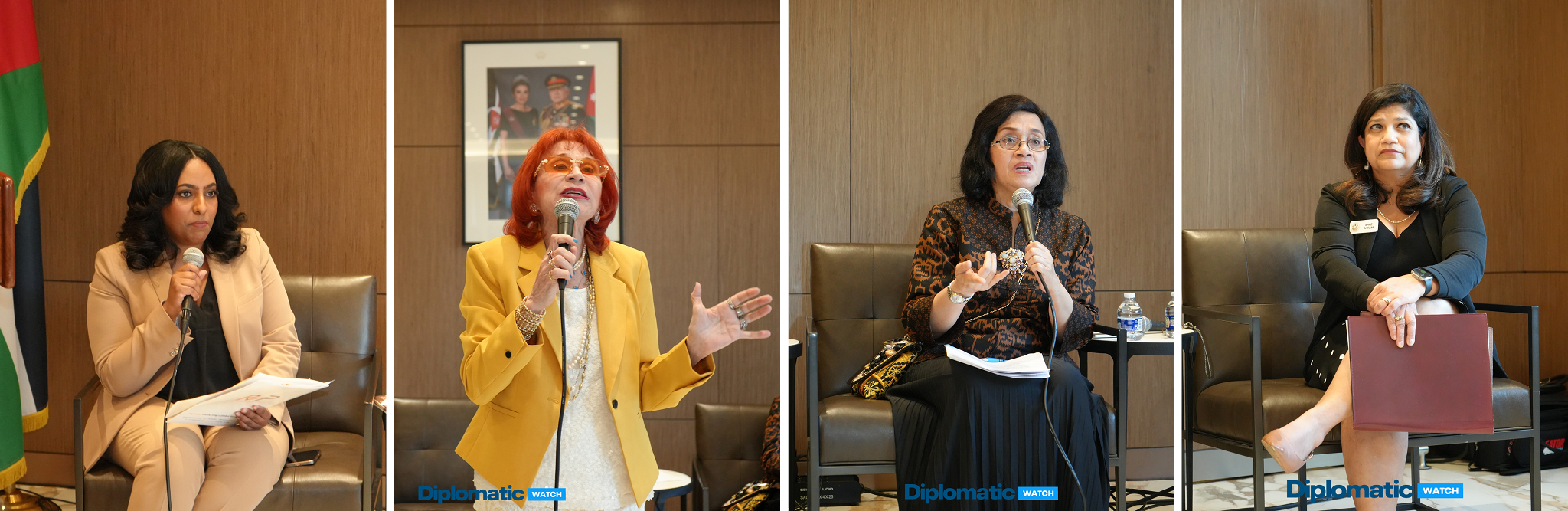
Drawing upon those experiences, Dr. Nining argued that leadership is measured less by formal authority than by the ability to strengthen institutions and expand opportunities for others. Decisions made during periods of uncertainty, she explained, require preparation, sound judgment, and the discipline to remain focused on long-term objectives rather than immediate results. Leaders who earn lasting confidence do so by demonstrating competence, consistency, and an unwavering commitment to the people they serve.
Her viewpoint also introduced one of the discussion’s recurring ideas: successful diplomacy, like successful public policy, depends upon relationships that develop over time. Whether working with governments, universities, financial institutions, entrepreneurs, or international organizations, meaningful cooperation grows through credibility, openness, and sustained engagement rather than short-term transactions.
From that discussion of institutional leadership and economic development, the conversation broadened to examine diplomacy through the human experience, beginning with the work of Dr. Judy Kuriansky, whose career has connected psychology, humanitarian action, journalism, and international advocacy across more than four decades.
Dr. Judy Kuriansky approached the discussion from the standpoint of a career devoted to understanding the human dimensions of international affairs. As Advisor to the Permanent Mission of Sierra Leone to the United Nations and an NGO Representative for the International Association of Applied Psychology and the World Council for Psychotherapy, she has spent more than two decades advancing mental health, humanitarian cooperation, and sustainable development within the United Nations system. Her advocacy helped secure the inclusion of mental health and well-being in major international agreements, including the United Nations 2030 Agenda for Sustainable Development, the Political Declaration on Universal Health Coverage, and the Global Digital Compact.
Her perspective was informed as much by humanitarian response as by diplomatic engagement. As a first responder and specialist in psychological resilience, Dr. Kuriansky has supported communities recovering from the September 11 terrorist attacks, school shootings in the United States, natural disasters in Japan, Haiti, China, Iran, Sri Lanka, and St. Maarten, as well as humanitarian emergencies involving Syrian refugees in Jordan. Those assignments, she explained, reinforced the importance of leaders who remain steady during periods of uncertainty while never losing sight of the people whose lives are directly affected by public policy.
For Dr. Kuriansky, diplomacy extends beyond negotiations and official agreements. It also requires protecting human dignity, strengthening resilience, and ensuring that economic and political decisions contribute to healthier and more secure communities.
That commitment has informed her extensive work advancing the leadership of women and girls. A founding member of Women4Diplomacy International, she has participated actively in the United Nations Commission on the Status of Women while supporting initiatives that promote women’s empowerment through education, humanitarian engagement, and international cooperation. Her work has included supporting Sierra Leone’s Hands Off Our Girls campaign, helping establish girls’ empowerment initiatives across Africa, and promoting peacebuilding through cultural dialogue.
Beyond her United Nations responsibilities, Dr. Kuriansky has built distinguished positions in academia, journalism, and broadcasting. She served for more than twenty-two years as an adjunct professor at Columbia University Teachers College, taught internationally at Peking Health Sciences Center and the Hong Kong Psychiatric Institute, and authored numerous books on psychology, resilience, healthcare innovation, peacebuilding, and human relationships. Her international service has earned numerous honors, including the United States President’s Lifetime Achievement Award, Sierra Leone’s Grand Commander of the Order of the Rokel, and the Global Impact Award from the Mental Health International Collaborative.
The discussion next turned to Sabrina Abdu, whose work demonstrates how education can become one of diplomacy’s most enduring instruments.
As Founder of RVP Consultants, Abdu has spent more than fifteen years building international partnerships that connect education, workforce development, and cultural exchange across twenty-four countries. Her organization has supported the implementation of United States Department of State educational exchange programs in more than two hundred schools across twelve states while strengthening collaboration among ministries of education, embassies, educational institutions, and international organizations.
Asked where trust is truly built in international affairs, Abdu offered an outlook shaped by years of connecting students, educators, governments, and communities across national boundaries. While diplomacy is often associated with negotiations between governments, she said many of its strongest foundations are established long before officials gather around negotiating tables. Classrooms, exchange programs, academic partnerships, and professional collaboration create lasting personal connections that often become the foundation for stronger international cooperation in later years.
Her focus has consistently centered on expanding educational opportunity while advancing women’s leadership, protecting children’s rights, and supporting survivors of domestic violence. Education, she said, equips individuals not only with professional skills but also with the confidence, awareness, and cultural understanding needed to engage constructively with people from different societies.
Looking ahead, Abdu observed that future leaders will confront challenges unlike those faced by previous generations. Artificial intelligence, climate change, workforce transformation, demographic change, and geopolitical competition require individuals who can think critically, communicate across cultures, and collaborate across disciplines. International education, she argued, remains one of the most effective ways to develop those capabilities because it encourages curiosity, adaptability, and respect for different viewpoints.
The conversation then moved into its second phase, focusing on negotiation, influence, and economic diplomacy.
As the principal conversation of the Second Annual Women in Diplomacy Forum, the panel gave meaningful expression to the forum’s theme, “Leadership at the Decision Table.” Drawing upon careers that span diplomacy, public policy, economic development, humanitarian action, psychology, education, entrepreneurship, and international engagement, the speakers demonstrated that effective leadership is built through preparation, collaboration, and service.
